Not Chasing the Serpent: My 300-Hour Classical Kundalini Tantra Yoga Teacher Training
"Concentrate on the natural pause between every breath."
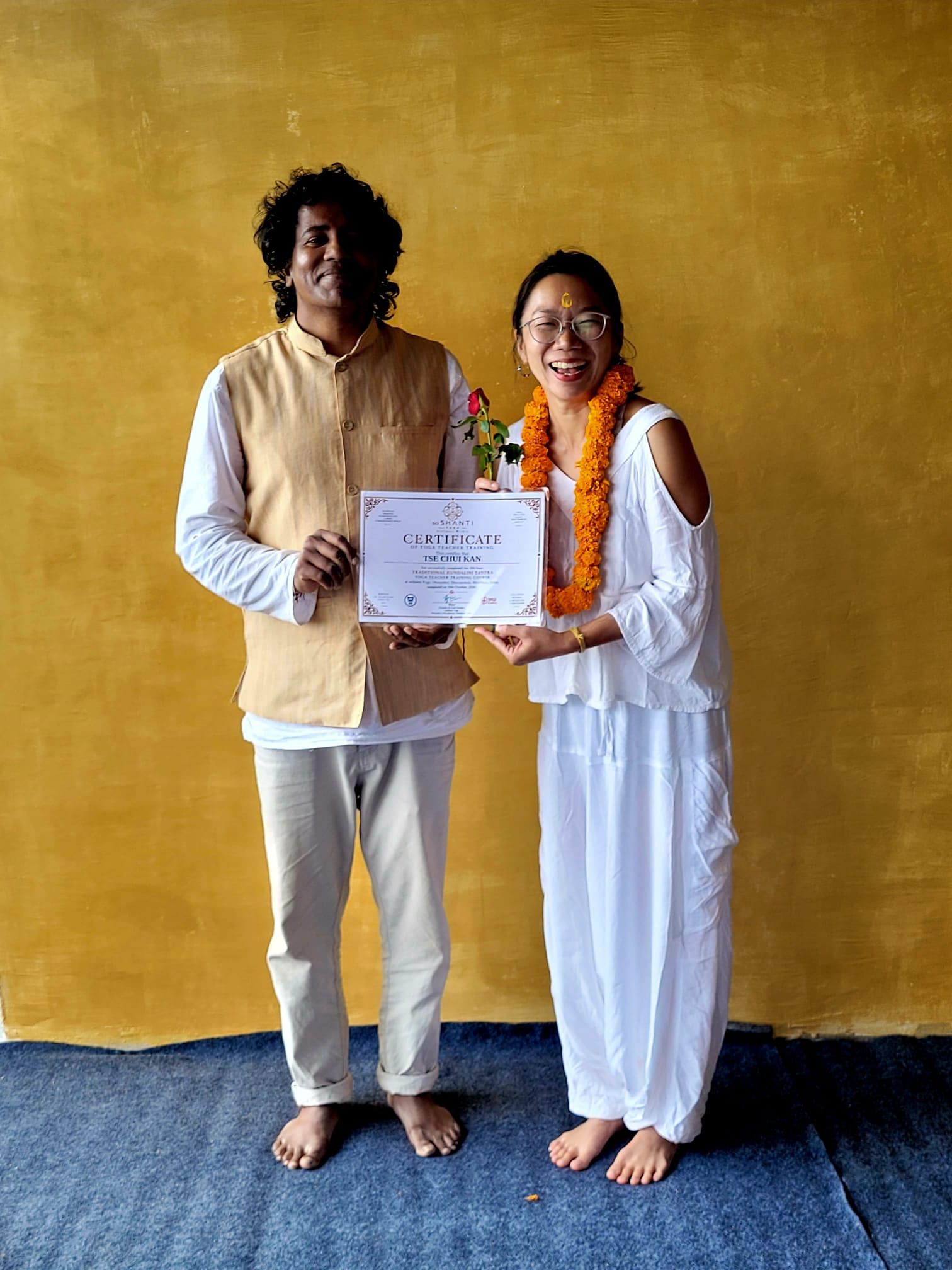
With those words from our teacher, we began a 20-minute meditation. When I opened my eyes, I thought only one second had passed. In that moment I truly understood how powerful it is to still the mind, and that the peace I felt was right there in the gap between breaths.
Then the teacher said, "Our mind is like a drunken monkey. Calming it is probably the hardest task in the universe."
Before I came, I had heard so many stories of "dramatic awakenings" of kundalini: ayahuasca ceremonies in South America, using medicine to help the energy awaken, mysterious experiences my friends talked about. I never had the urge to go through any of that. I was simply curious: why is everyone talking about this? Two days before the course started, I did some research online and read that a dormant vital force awakens from the base of the spine, and may bring visions or a sudden burst of creative power.
The real experience was gentle and subtle, nothing dramatic at all. I saw my awareness slowly become steadier and more attentive. The energy channels in my body felt cleared, my body felt well, and my mind felt calm.
This post is about that gap: from the awakening I imagined to the practice that was real. If you are a yoga practitioner, a bodyworker, or simply curious about kundalini, I hope you'll leave with a set of clear, grounded notes.
Why I came to the Himalayas
I am a Thai massage therapist and a certified Thai massage teacher, teaching in Taiwan and based on Xiaoliuqiu Island in Pingtung. My teaching is mainly traditional Thai massage, Thai-style stretch massage and oil massage, and I also lead stretching and breathwork classes before massage classes.
For me, there was nothing that Thai massage and yoga couldn't answer. I came because I needed a vacation. A break from all the high and low moments of life, a moment to sink in, digest, and go back to the cave. I wanted to be nobody in the middle of the Himachal Pradesh mountains, to learn diligently, to disappear, and to find myself again in the most raw form.
I also wanted to be rejuvenated, and to learn the traditions, the culture and the wisdom of the ancient sages. Through them I hoped to expand beyond my own limitations of time, space and ignorance, to move into the light, and to live a higher consciousness in daily life and in my work.
Why soShanti Yoga? It has always been my first inspiration on the yoga path, my first guide. I feel deeply connected to Indian people and their culture, and coming back here makes me feel safe and happy. soShanti sticks to tradition, but stays open to growing with time.
To be honest, before I left I was also afraid: if I really "awakened," would I go crazy and lose myself? Later I realised this fear was exactly what the course addressed first.
About the course
| Detail | Information |
|---|---|
| School | soShanti Yoga |
| Course | 300-Hour Classical Kundalini Tantra Yoga Teacher Training |
| Format and length | In person, 30 days |
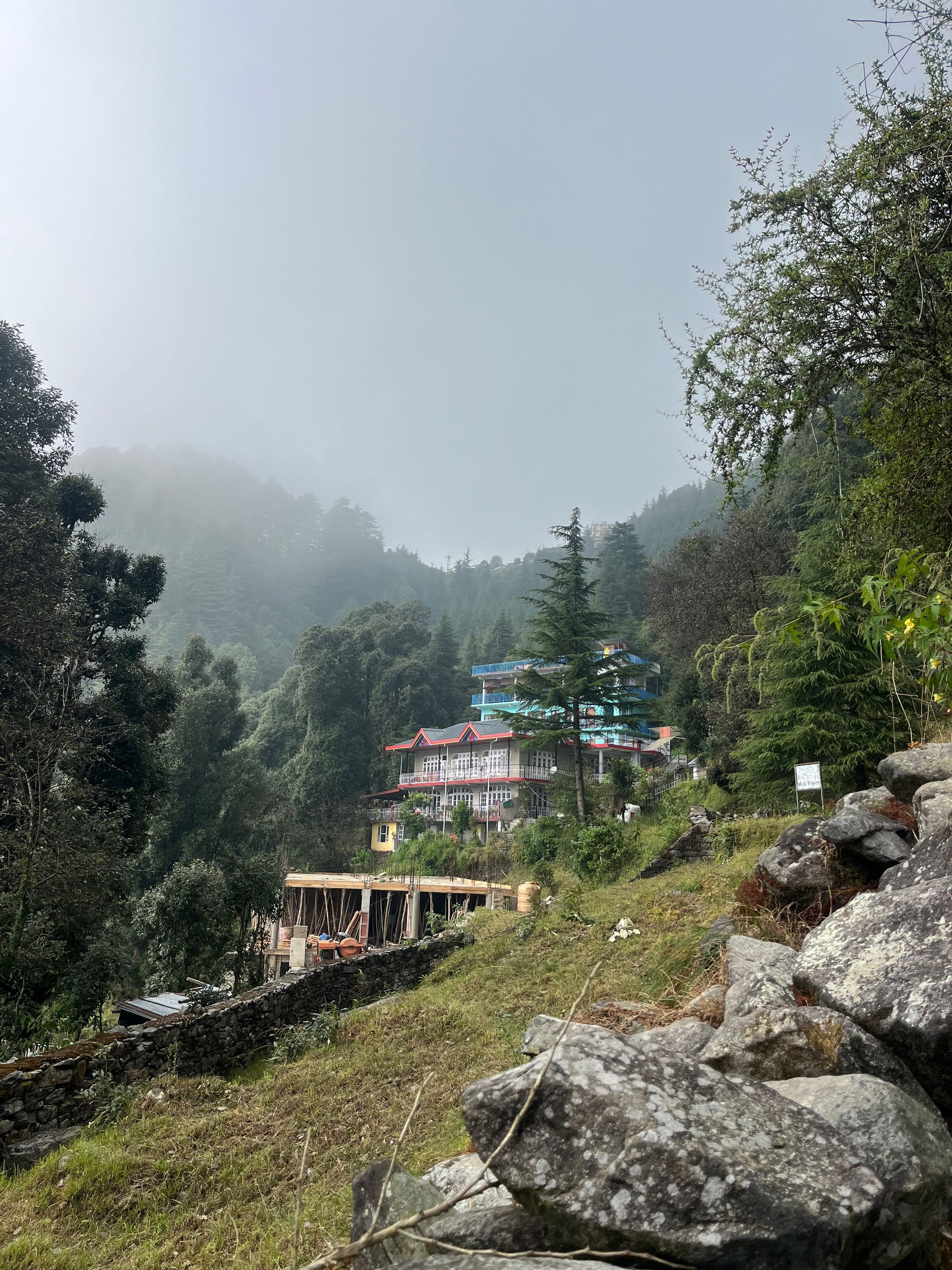
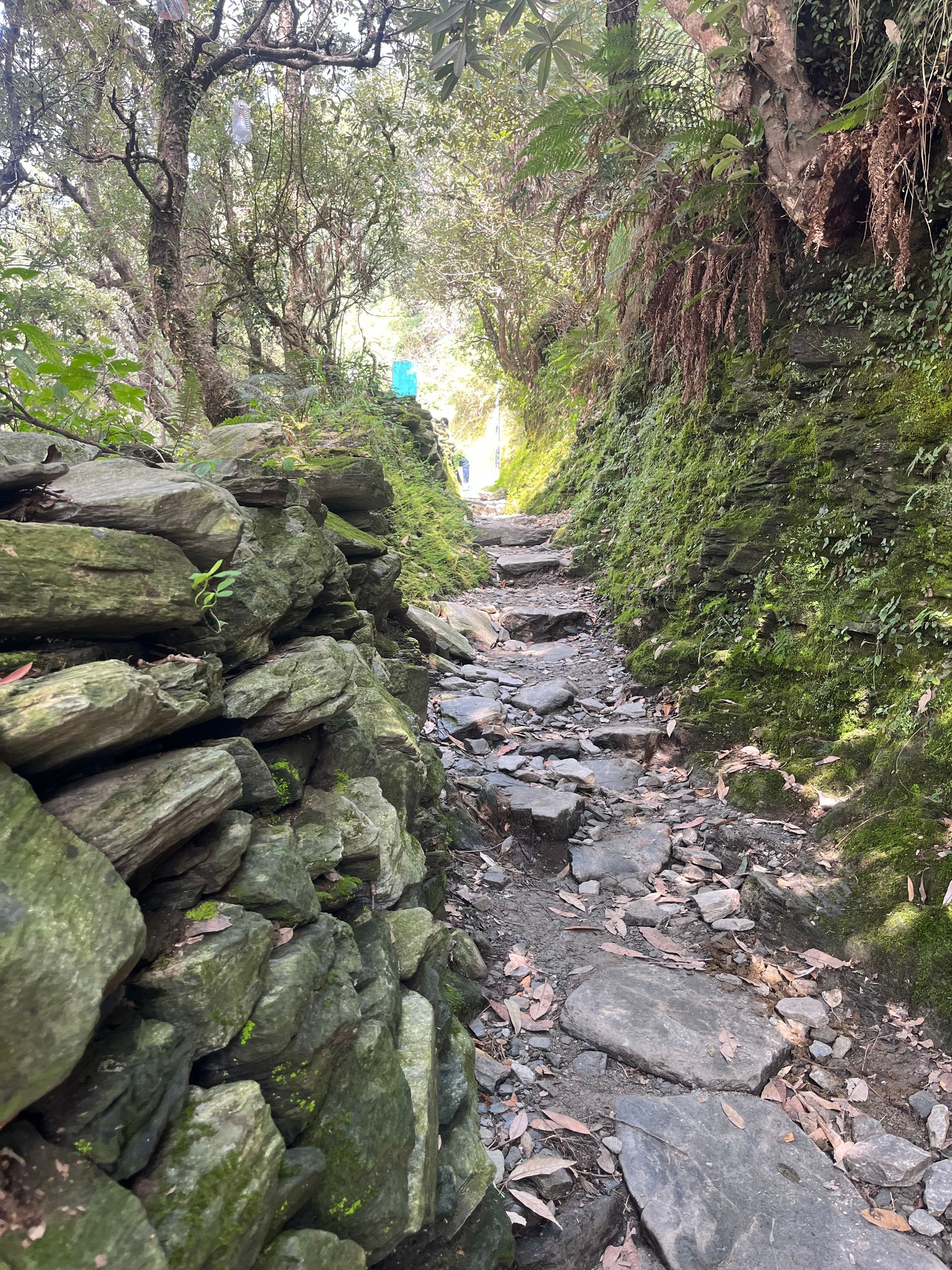
| Location | Upper Dharamkot, Dharamshala, Kangra, Himachal Pradesh, India |
| Core text | Kundalini Tantra by Swami Satyananda Saraswati |
| Assessment | 100% attendance and a 60-minute practical teaching exam |
| Prerequisite | None |
A typical day:
| Time | Activity |
|---|---|
| 6:30–7:15 | Self-practice meditation |
| 7:15–9:45 | First practice session |
| 9:45–10:15 | Breakfast |
| 10:15–10:45 | Self-study |
| 10:45–13:00 | Yoga philosophy class |
| 13:00–14:30 | Lunch and rest |
| 14:30–17:30 | Alignment yoga |
| 17:30–18:30 | Meditation and mantra chanting |
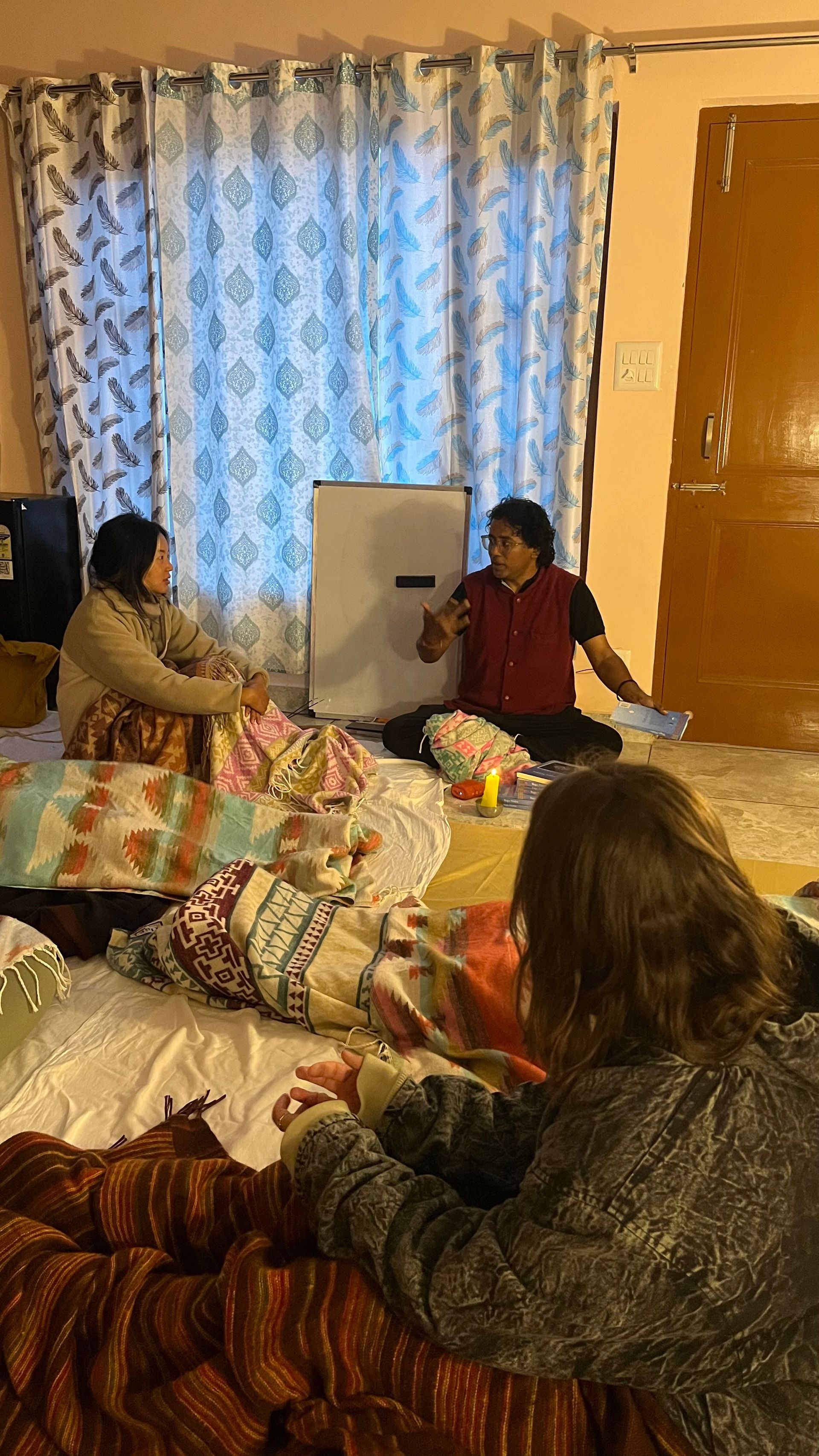
Our lead teacher, Bijay, is extremely patient and understanding, always giving us space to digest and let things sink in. He is very knowledgeable about the practice, the different schools of yoga, and Ayurveda.
Eshanye, another teacher, is everyone's favourite. She explains alignment in great detail, deepening our understanding of asanas and the flow of prana, and she gave us many practical tips for our own teaching.
Six things I learned
1. What kundalini is, and what it isn't
Kundalini is often described as dormant spiritual energy coiled at the base of the spine. In the tantric view, it is the Shakti within each of us: an evolutionary potential of consciousness, waiting to be awakened and integrated into life. The "coiled serpent" is a symbol for meditation, not an actual organ in the body.
True awakening is not measured by how dramatic it feels, but by transformation: clearer awareness, deeper compassion, a steadier mind, and humility. "Taming" the mind does not mean suppressing it. It means training, refining and directing it.
Notes:
- Kundalini is a potential to be integrated, not a sensation to chase
- The serpent image is a symbol, not anatomy
- Awakening is measured by integration, not drama
My experience: Online sources often describe kundalini awakening as a dramatic change, energetically, physically and mentally. That made me curious, and a little worried. But in class, our teacher explained that it can be a very subtle and very safe process, awakening gradually through mantra chanting, meditation and other practices. Hearing that, I felt at ease.
2. The subtle body map
Yoga and tantra use a map of the "subtle body" to describe inner practice: life force (prana) flows through energy channels (nadis). The three most important are Ida (lunar, cooling, inward), Pingala (solar, warming, outward) and the central channel, Sushumna. The practice aims to balance Ida and Pingala and clear Sushumna, preparing the way for kundalini energy to rise.
Along the central channel sit the chakras, transformative centres where energy, element, psychology and consciousness meet. There are also three "knots" (granthis), symbolising our attachment to physical survival, emotional bonds and mental identity. These knots are not forced open; they loosen slowly through awareness and maturity.
Notes:
- The subtle body is a practice map, not medical anatomy
- Ida, Pingala and Sushumna form the core structure
- Chakras are centres of transformation, not just emotional labels or coloured circles
My experience: This nadi system is actually in sync with the Sen line system of Thai massage. For me it was not difficult to digest at all, because it already exists in the Thai massage tradition and teaching (more on this below).
3. Preparation is the path
Strong energy needs a strong vessel. If the body is exhausted, the breath irregular, the mind anxious and life chaotic, deep practice only magnifies the imbalance. So this path doesn't begin with intense techniques. It begins with preparation: regular sleep, an ethical foundation (truthfulness, non-harming, moderation), emotional maturity, and pure motivation. Awakening should not be sought for power, fame or superiority, but for clarity, service and liberation.
Diet is part of the practice too. The course recommends a sattvic diet. In Sanskrit, sattva means the quality of purity, clarity and balance. Sattvic food is fresh, simple and gentle, leaving body and mind light and clear: fresh fruit and vegetables, grains, lentils, nuts, and dairy in moderation, mostly vegetarian. Food that is very oily, stale or overstimulating makes the mind heavy or restless. The key is moderation, not extreme fasting or rigid rules.
Notes:
- Preparation is not a delay; it is part of the awakening
- Steady daily practice beats occasional intensity
- Diet should support clarity, not become an identity
My experience: For the whole month, I ate sattvic vegetarian food cooked by our talented chef at the school. We also meditated every day, sometimes guided by the teacher, sometimes on our own. That brought me better focus at any time of the day.
4. Safety and discernment
Kundalini practice touches breath, attention, emotion, identity and the nervous system, some of the deepest layers of a person. Practise too hard or too fast, and the system may respond with agitation, fear, insomnia, emotional flooding or confusion. Forcing breath retention, overusing bandhas (energy locks), or pushing to produce experiences can all create imbalance.
Another subtle risk is "spiritual ego": treating visions, heat or bliss as proof that you are superior to others. Real practice makes you simpler, kinder and more responsible.
The course also taught us to tell the difference. A healthy spiritual opening makes you more able to live, relate and stay grounded. Imbalance can look like being unable to sleep or eat, paranoia, disconnection from the body, or being unable to function in daily life. When that happens, slow down, return to simple grounding practices, talk to a trusted teacher, and seek professional help when needed. Pausing is not failure; it is intelligent self-care.
Notes:
- Healthy signs: good sleep and digestion, emotional stability, better focus, more humility
- Warning signs: insomnia, panic, isolation, inflated claims, compulsive practice
- For people with severe anxiety, trauma or unstable mood, gentle grounding and professional support are more suitable than intense energy work
My experience: Don't force anything in the practice, and respect the boundaries of yourself and others. Ground yourself before going higher into the chakras. This is fully in line with the principles of my trauma-informed massage work.
5. When experiences arise
Awakening experiences can be physical (heat, tingling, trembling), emotional (grief, love or fear surfacing), symbolic (dreams, imagery), or a deep silence. But the experience itself is not the goal. Our teacher gave us a simple attitude: notice, respect, integrate, continue. Don't fear it, don't cling to it, and don't build your identity around it.
The course also spoke about "descent." Many people imagine kundalini only moves upward, toward higher chakras and higher states. But true awakening must come back into life: into the body, speech, relationships and work. If awakening doesn't touch daily life, it is still incomplete.
Notes:
- Experiences are signposts, not proof of progress
- Even blissful states are temporary; don't hold on to them
- Keep a journal: what happened, what practice came before, how sleep and daily life were affected
My experience: On the day we finished chakra healing week, lying in shavasana (corpse pose), I suddenly felt a great love and support from my ancestors. They seemed so close to me, physically and energetically. That closeness moved me immensely, and tears started running from my eyes onto my yoga mat. Even after class, when we all went down for chanting, the tears were still there.
It was as if a gate opened for me to fully accept where I come from. I don't know what my ancestors passed on to me, maybe certain patterns, a kind of energy, or some inertia, but I fully acknowledge it. I made a wish: to grow fully from a deeply rooted self and reach the fullest of who I am designed to be, and also to release the karma my ancestors passed on to me.
I didn't try to explain or repeat the experience. I simply let it settle into an acceptance of my roots. I think this is what our teacher meant by "integration."
6. Kriya yoga and the left-hand path
Kriya means "action" or "process." Here it refers to a systematic, sequential inner practice combining asana, pranayama, mudra (gestures), bandha, mantra, chakra awareness and meditation. The body becomes a pilgrimage route, with the spine, chakras, breath and inner space as stations along the way. Because kriya works directly with energy and attention, it must be learned progressively and under qualified guidance.
The left-hand path (Vama Marga) is one of the most misunderstood topics in tantra. Modern culture often reduces it to sex or rebellion, but its deeper meaning is transforming the dualities created by fear, desire and taboo through awareness. In class we studied it historically and symbolically, not as a technique to imitate casually. Any teaching involving sexuality, power or teacher-student relationships must rest on consent, transparency and clear boundaries.
Notes:
- Kriya is a structured process; the sequence itself is a protection
- The left-hand path belongs to lineage context and is best understood historically and symbolically
- The most universal "inner left-hand path": meet the parts of yourself you reject with awareness, rather than acting them out
My experience: Around the third week, the kriya practice started bringing very subtle changes in my body, and I began to feel them. It was an amazing experience. It's not like asanas, with very obvious physical effects, but it does make an impact on my state.
My daily practice
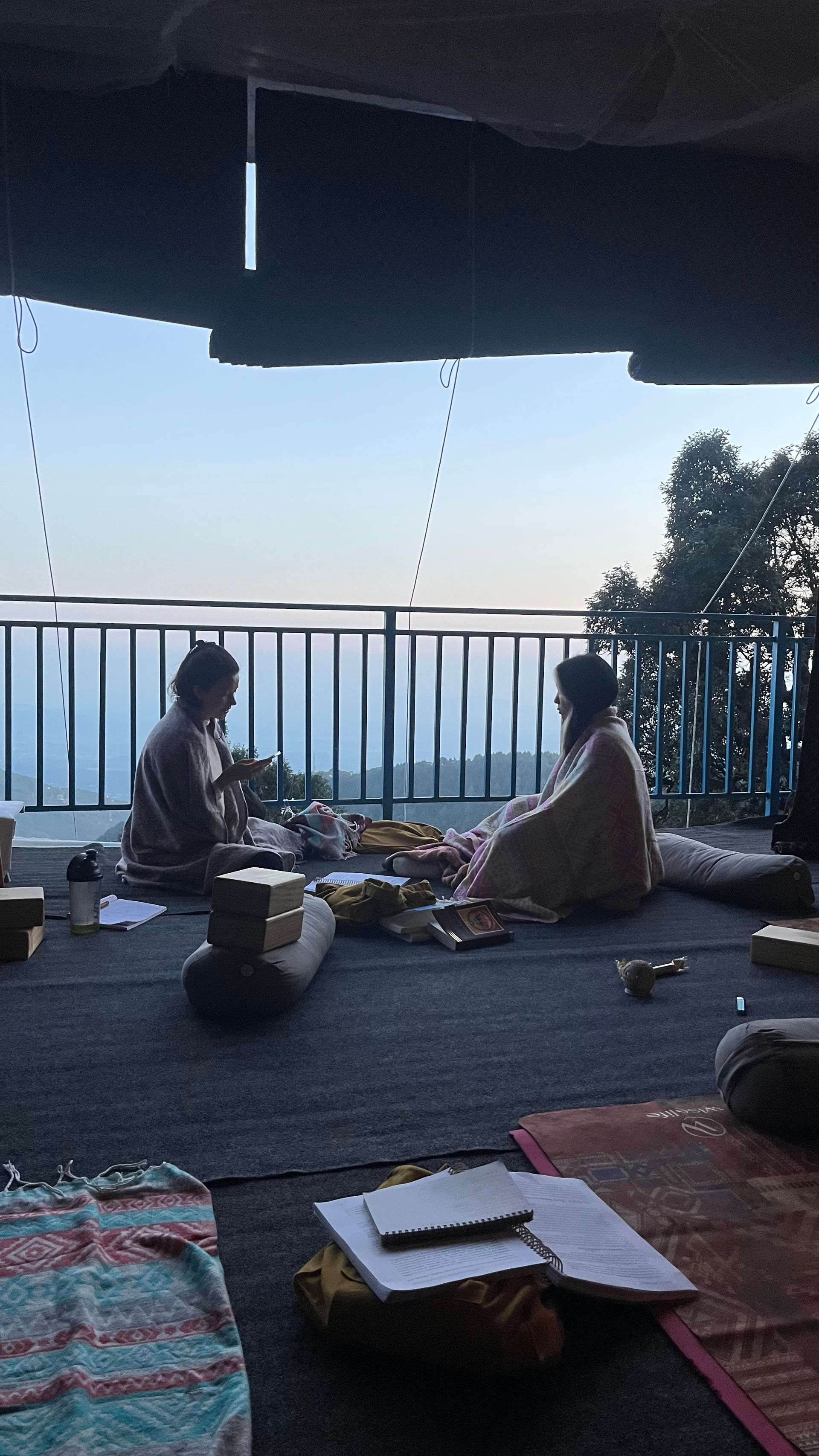
My sadhana was simply to follow the daily schedule our teachers gave us. From 7am until 7pm: meditation, asanas, yoga philosophy, history, lunch with classmates, self-study, alignment yoga, meditation and chanting. Honestly, it was quite tough.
The hardest week
In the second week, we were introduced to more kriya exercises. They stirred up a lot of emotions, and self-judgement. I guess it was cleansing the energy channels as well. I remember saying to my classmate Joya, "Oh my god, still two weeks to go!"
The third week was chakra healing week. During the first three nights, for the healing of the first three chakras, I had crazy, scary dreams.
What changed afterwards
After those three nights, I started to become more stable: in my sleep, my dreams, and my relationship with myself.
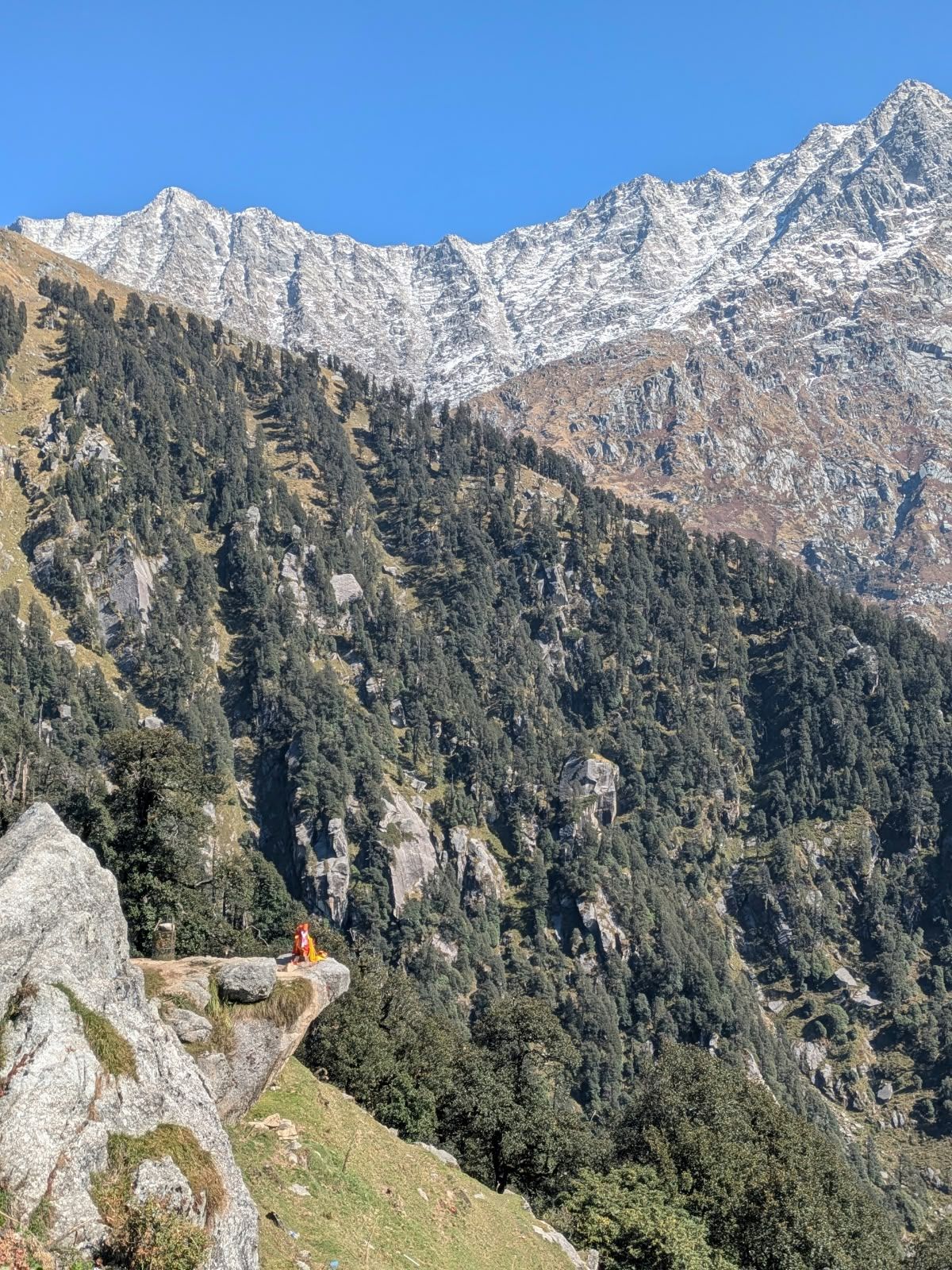
This time the school had moved to a quieter spot in the mountains, and it made a huge difference to our sleep! My Oura ring recorded a sleep quality score above 90 most of the time. There were only the sounds of birds, the wind moving the tree leaves, and running water. I'm really grateful for it.
The practice that became mine, and the one that didn't
I love the meditation from the Vigyan Bhairava Tantra: observing the pause between every breath. It has become one of my favourite practices to bring myself back to calmness so quickly.
As for waking up very early, during the divine hours, to meditate, I'm still trying. Honestly, I don't like it, because I love sleeping so much :)
An unexpected discovery
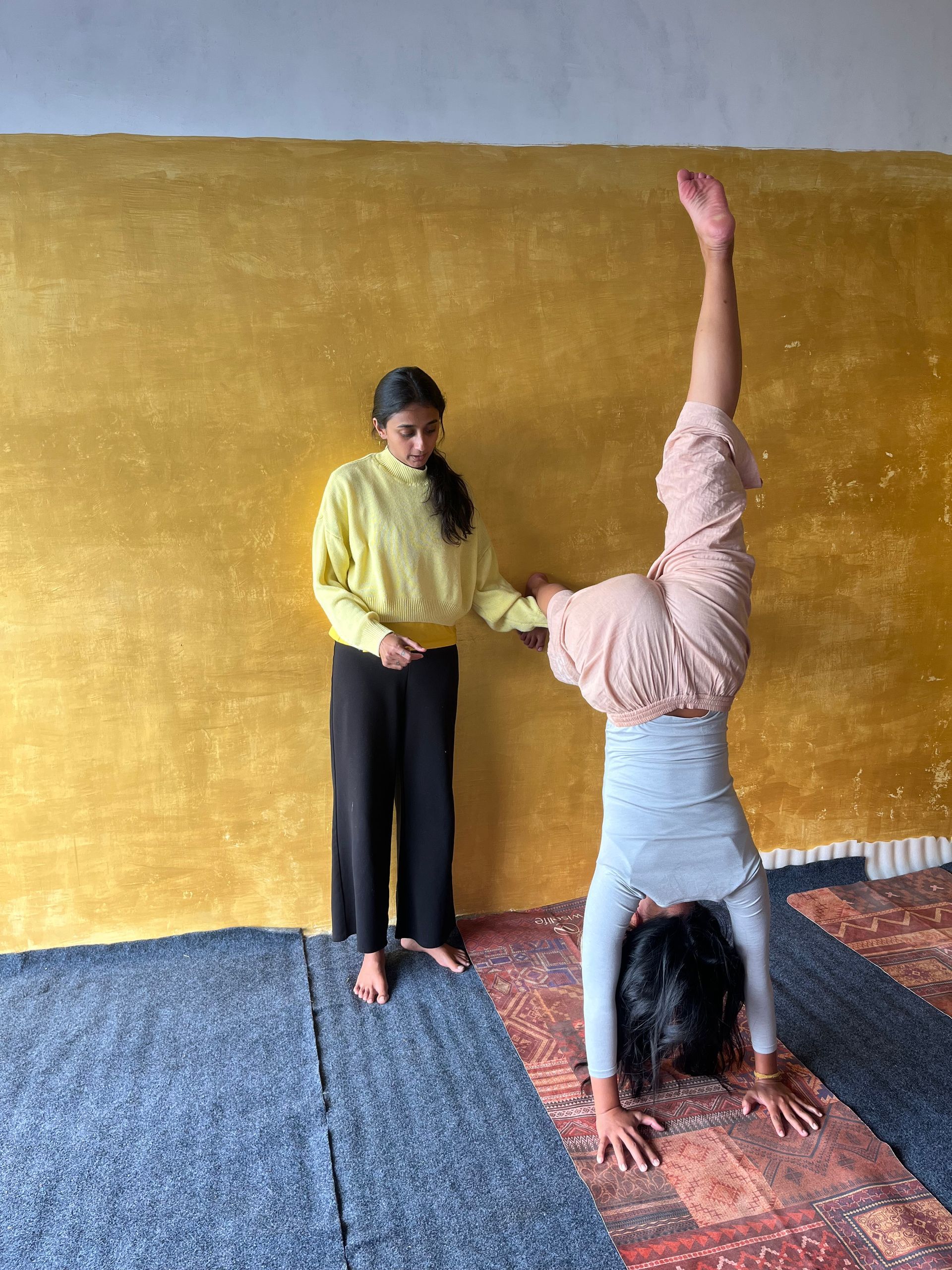
A massage therapist's quality of touch really matters in a yoga session. When a yoga teacher touches a student for alignment and adjustment, a massage therapist's hands just learn these faster!
Where kundalini meets bodywork
This part is written for massage therapists and bodyworkers.
Three main lines, one concept
Kundalini yoga always talks about balancing the Ida and Pingala channels, and clearing Sushumna so that kundalini energy can move through it. The Sen line system of Thai massage has three corresponding main lines: Sen Ittha, Sen Pingkhala and Sen Sumana. Same concept, only slightly different pronunciation! For Thai massage therapists, the subtle body map of kundalini is not unfamiliar at all.
My presence changed
Since the course started, I've met many more strangers who come over to me. Even in a small setting or a casual occasion, they're open to making eye contact with me and walking over to talk. That was very, very surprising. At the end of the course I led a session, and my teacher's feedback was that I have a very calm energy presence.
The massage therapist's anchor
The grounding practices I learned this month, through mantra chanting and meditation, help me access the peace inside. That peace is my anchor, no matter what clients are experiencing on the mat. Kundalini stresses the void, Shiva, the stillness, and this is what anchors me as a massage therapist and allows me to hold space for my clients.
Working with freedivers
The training gave us a lot of practice in mindfulness and accessing stillness. This is very important for a massage therapist working with freedivers. The sport needs a calm nervous system, and before any touch in our work, our nervous systems speak to each other first. So having a calm nervous system ourselves is very important when massaging these freediving athletes.
Breathwork is another thing. For a massage therapist, breath is everything. To deliver good work, we depend highly on a regular, consistent breathing pattern.
Notes: three grounding principles bodyworkers can borrow from Kundalini Tantra
- Tune your own nervous system first: before you touch, your state is already felt
- Return to the breath: regular, steady breathing is the foundation of good work, and your anchor
- Don't force, keep boundaries: respect the client's boundaries and your own; ground first, then go deeper
Notes worth writing down
- Kundalini is a potential to be integrated, not a sensation to chase.
- Preparation (sleep, food, ethics, emotional maturity) is itself part of the awakening.
- The subtle body is a practice map; don't confuse it with medical anatomy.
- Steady daily practice beats occasional intensity.
- Experiences are signposts, not proof of progress.
- Healthy practice makes you more grounded, kinder and better able to live well.
- Awakening must "descend" into the body, speech and relationships.
- Pausing is wisdom, not failure.
- Our nervous systems speak to each other. Tune your own first: it's a lifelong skill for all walks of life, whether you're a massage therapist, a public speaker or anyone else.
Is this training for you?
A good fit if you:
- Want an in-depth study of classical tantra, not just a surface experience. I already had a 200-hour yoga teacher certification, and this course was a deep study covering pranayama, sacred geometry (yantra), mantra, asana and meditation
- Value depth over hype and enjoy studying the classical texts
- Want to bring the practice back into your own teaching or bodywork
Think carefully or go slowly if you:
- Are looking for dramatic experiences or a quick awakening
- Are currently in serious psychological distress, with unstable sleep or strong anxiety. In that case, gentle grounding practices and professional support will serve you better than intense energy work
Practical tips before enrolling:
- Time: set aside at least one full month
- Reading: expect to read a lot of material before and during the course
- Language: the course is taught in English
- Culture: be comfortable with Indian food and culture
- Accommodation: a simple room or cell where you can study
- Discipline: be very disciplined and diligent in your practice
- Food: be okay with a month of sattvic vegetarian food: fresh, simple, gentle meals that keep body and mind light and clear, avoiding very oily, overstimulating or stale food
Closing
I think back to that 20-minute meditation that felt like one second. Before I left, I worried that awakening might make me crazy and lost. A month later, I saw no visions and no mysterious power exploded out of me.
What I gained was more real. This was a physically very demanding course, so I'm now in a bit better shape! My nervous system is better toned, and more resilient too. The drunken monkey is still there, but I've learned to let it rest for a moment in the pause between breaths.
That's what I mean by "not chasing the serpent": not chasing dramatic experiences, but preparing well, integrating well, and letting the practice slowly grow into life.
Bringing it home to Xiaoliuqiu
If you're interested in practising classical kundalini tantra yoga, we can arrange sessions on Xiaoliuqiu. And in our massage courses, every class starts with a session of breathwork and light stretching, focusing mostly on spinal awareness.
Your turn
What experience have you had with classical kundalini and tantra yoga? Let me know in the comments! And follow me on Instagram @STRETCHOLOGYASIA for more content for bodyworkers.
RECOMMENDED ACTIVITIES
MORE BLOGS